Subnautica 2 Multiplayer Guide: 4-Player Co-op Tips
How Subnautica 2 4-player co-op works, what is confirmed for launch, and practical team roles to try during your first Early Access session.
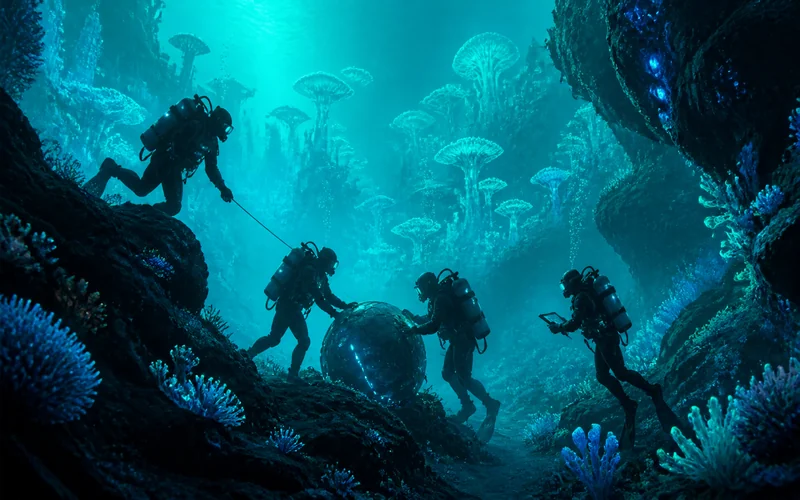
For the first time in the franchise’s history, Subnautica 2 features official multiplayer support. This guide separates what is confirmed from launch-week planning advice, because several exact menu flows and balance details still need in-game verification.
How Multiplayer Works
- Up to 4 Players: You can form a team of up to four ‘Pioneers’.
- Online Co-op: Steam lists online co-op and multiplayer.
- Cross-Platform Play: Steam lists cross-platform multiplayer; PC and Xbox are the confirmed Early Access platform families.
- Optional: The game is still built from the ground up as a premier single-player experience. Playing co-op is entirely optional, and no story or content is locked behind multiplayer.
For platform availability, see Will Subnautica 2 be on PS4 or Switch.
4-Player Co-op Roles & Tips
To maximize efficiency (and survival chances), consider dividing tasks among your team:
1. The Quartermaster (Base Builder)
- Role: Stays near the drop pod or primary base.
- Tasks: Refines raw materials, builds base modules, monitors power / oxygen needs, and keeps spare supplies ready.
2. The Gatherer (Miner)
- Role: Explores the Safe Shallows and immediate surroundings.
- Tasks: Runs short resource loops and keeps the Quartermaster supplied without pulling the whole team away from the safe route.
3. The Scout (Navigator)
- Role: Pushes into unknown areas first.
- Tasks: Drops beacons, records landmarks, scans fragments, and reports whether a map marker is actually useful.
4. The Biologist (Food & Upgrades)
- Role: Manages sustenance and player upgrades.
- Tasks: Catches food, manages water, scans fauna and flora, and warns the team before entering unfamiliar ecosystems.
Communication is Key
Since the game features large new underwater threats in the official trailers, communication is essential. If one player gets lost or ambushed, the others need a clear beacon trail and a known return route.
For your first run together, follow the first 24 hours guide and split the four roles above before you load in.
Setting Up Your First Co-op Session
The exact setup flow should be checked in your current build. Since the EA 1.2 Buddy System update (August 19, 2026), in-game Proximity Chat, Player Trading, Player Revive and Emotes are live — the old “decide voice chat outside the game” workaround is gone. The practical prep that still matters:
- Pick a stable host before the session starts.
- Test in-game Proximity Chat ranges once you spawn, and keep an external party as backup for long-range callouts.
- Agree on beacon names before the first deep trip.
- Keep a shared note for confirmed landmarks, fragments and routes.
Inventory, save ownership and host persistence should be verified in the launch build before you plan long co-op expeditions.
Cross-Play Caveats
Cross-play details should be checked in-game on launch day, but these habits are low-risk:
- Voice chat: EA 1.2’s Proximity Chat is live in-game now; keep an external party as backup for long-range callouts.
- Beacon naming: use short names like BASE-1, WRECK-N, COPPER-E.
- Latency: let one player scout tight cave routes before all four enter.
- Save expectations: assume the host controls world persistence until Unknown Worlds or the launch build proves otherwise.
For a console-by-console availability breakdown, see Will Subnautica 2 be on PS4 or Switch.
Recommended Unlock Order for a Fresh 4-Player Team
Suggested unlock priority for the team as a whole:
- Scanner + Survival Knife (every player) — cannot share blueprints scanned by others, so each player needs their own Scanner.
- Standard O2 Tank (the Gatherer first) — extends mining range immediately.
- Repair Tool (the Quartermaster) — needed for the drop pod radio and base modules.
- Habitat Builder + first Multipurpose Room (Quartermaster) — gives the team a fast-travel anchor point.
- First vehicle or mobility upgrade (Scout’s job to find) — whatever the launch build makes available first.
A common mistake: all four players try to gather Titanium in the first 30 minutes. You only need ~6 Titanium for the first base module — diversify earlier.
Multiplayer-Specific Hazards
Some co-op mistakes are more dangerous than solo mistakes because four players can all get lost together:
- Tight caves: one player enters first; the rest hold the route.
- Resource loops: never let all four players scatter without a beacon trail.
- Deep open water: send one scout toward unconfirmed landmarks before committing the whole team.
For the full list of tracked threats per biome, see the biome watchlist.
Multiplayer FAQ
Is Subnautica 2 multiplayer free? Every player needs access to the game through purchase or Game Pass. No separate multiplayer fee has been announced.
Is there PvP? No. The 4-player co-op is purely cooperative. There is no friendly-fire damage, no PvP arenas, and no plans announced for PvP modes.
Can I play with my friends if I’m on PS5? Not at Early Access launch — only PC and Xbox Series X|S support multiplayer right now. See the platform availability page for the current status.
Does the difficulty scale with player count? Unknown Worlds has not published exact scaling numbers. Treat difficulty scaling as unconfirmed until players can test multiple team sizes.